Your ERP Is Not Your Source of Truth. And That’s Okay.
One of the most common questions I hear when talking with business leaders is, “What’s the best ERP system?” It is a reasonable question, but after more than twenty-five years of designing integrations, building data platforms, and helping organizations solve technology problems, I have come to believe it is the wrong place to start.
The better question is not which system can do everything. It is how we make all the systems already running the business work together.
The Reality of Modern Business
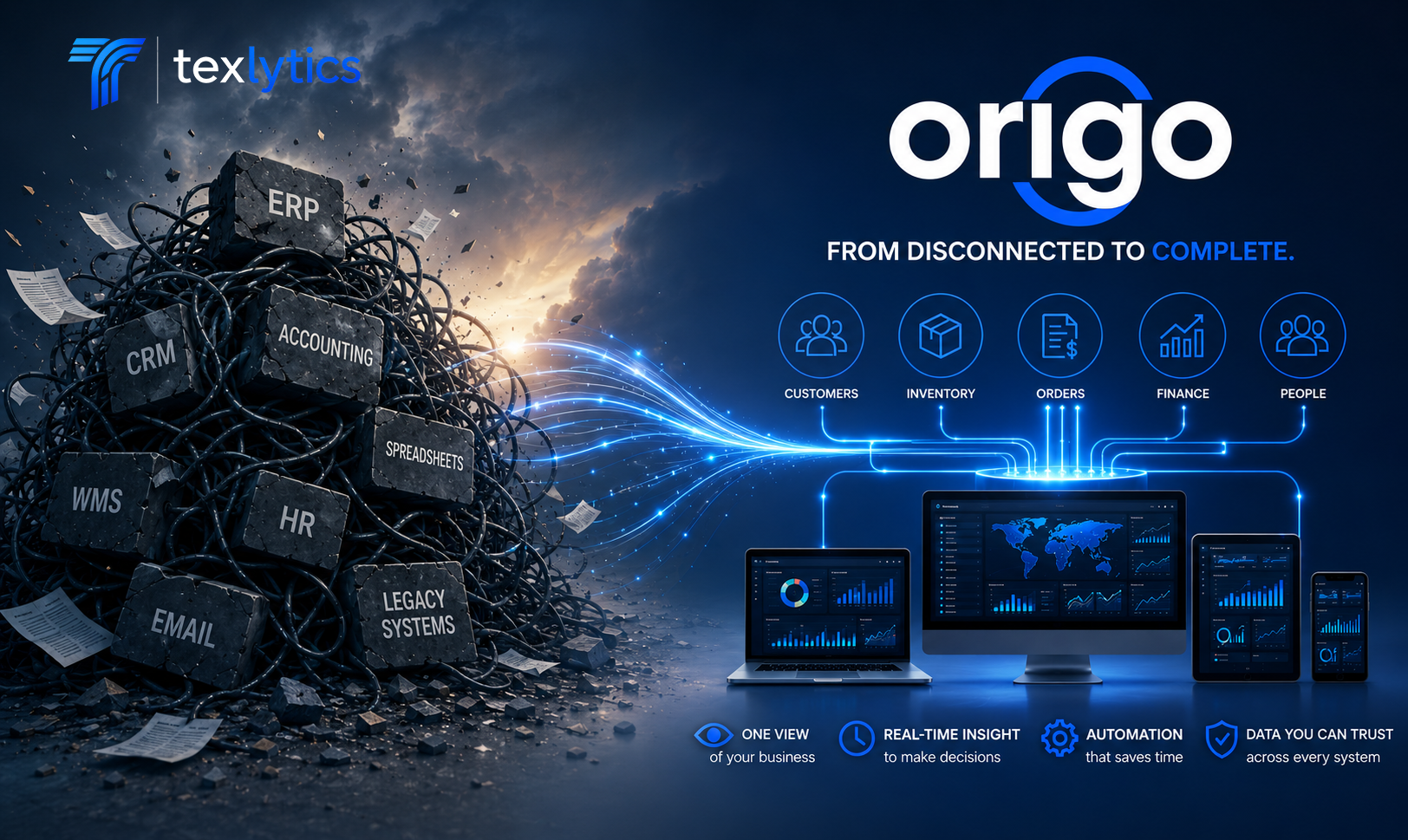
I have yet to work with an organization that truly runs on a single application. There is usually an ERP somewhere near the center of the business, but it is surrounded by other systems that have accumulated over the years. There may be a CRM for sales, specialized estimating software, payroll, document management, warehouse applications, reporting platforms, homegrown databases, and more Excel spreadsheets than anyone wants to admit.
That does not necessarily mean someone made a bad technology decision. Most of those applications were added because someone had a problem and found a tool that solved it. The estimating system may serve the estimators better than the ERP. The CRM may give the sales team capabilities the ERP does not have. A homegrown application may support a process so specific to the business that no commercial product handles it well.
The trouble begins when those applications stop communicating with one another. Customer information is entered in one system but never reaches another. Inventory numbers differ depending on which screen you are looking at. Finance trusts one report while operations trusts another. As those gaps grow, employees fill them by reentering information, downloading files, sending emails, and maintaining spreadsheets simply because that is the only way to keep the business moving.
The spreadsheet usually gets blamed, but the spreadsheet is rarely the real problem. It is normally the business waving a flag and telling us that the systems are not communicating.
Rethinking the Single Source of Truth
The technology industry has promoted the idea of a single source of truth for years. In theory, it makes perfect sense. Put all the information in one place, make everyone use the same system, and every department will work from the same numbers.
Businesses do not evolve that neatly. They acquire companies, add departments, adopt specialized software, respond to customer requirements, and replace individual applications as their needs change. Their technology grows along with the business, which means the idea of putting everything into one perfect application becomes harder to maintain over time.
We can spend years replacing systems in pursuit of that perfect environment. By the time we finish, the business has often changed again.
That is why I do not believe the goal should be forcing the entire organization into one application. The goal should be making every application contribute to one shared understanding of the business. The ERP may be the source of record for financial or operational information, while the CRM owns the sales pipeline and the payroll system owns compensation. Each system can remain responsible for what it does best without pretending it contains the complete truth about the business.
There is an important difference between a source of record and a source of truth. A system may own a specific piece of information, but understanding the business requires connecting that information with everything around it.
Integration Is the Missing Layer
When I look at a disconnected technology environment, I do not start by deciding which application has to go. I start by figuring out which system owns the information, where that information needs to go, and how it gets there without an employee moving it by hand.
Let the ERP manage the processes it handles well. Let the CRM manage customer relationships and the warehouse system manage fulfillment. Let accounting manage the books and specialized applications manage the processes they were designed to support. They do not all need to perform the same job, but they do need to agree on the information that crosses between them.
Once that foundation is in place, reporting becomes more dependable because the organization is working from consistent information. Automation becomes easier because workflows no longer stop when they reach the edge of one application. Employees can stop acting as the integration layer between systems and spend more time using the information instead of moving it around.
Artificial intelligence is a good example of why this matters. AI can only be as useful as the business context available to it. If a customer has different names, balances, or project information in three different systems, AI does not magically know which one is correct. It may produce a very polished answer, but that answer is still being built from an incomplete or conflicting story.
Integration does not automatically make those disagreements disappear. It forces the business to define which system owns the information and how that information should be shared. That is what gives reporting, automation, and AI a foundation people can actually trust.
Why I Built Origo
After years of connecting ERP systems, CRMs, accounting platforms, data warehouses, reporting tools, and custom applications, I realized the problem was rarely any individual piece of software. Most of the applications did exactly what they were designed to do. The real problem was everything in between.
Information became trapped inside applications that were never designed to communicate. Integrations were missing, brittle, or dependent on someone remembering to move the data manually. Every new application solved one problem while potentially creating another gap in the larger technology environment.
That realization became part of the foundation for Origo by texlytics. Pronounced “Or-ee-go,” origo is the Latin word for origin or beginning. I chose the name because connected technology needs a reliable place to begin.
Origo is not intended to be another rip-and-replace ERP strategy. It can support core business operations, but it is also designed to connect, extend, and manage information across the organization. It gives businesses a platform where existing applications can work together, new workflows can be built, and information can move without pretending the rest of the technology stack does not exist.
That connected foundation makes reporting more trustworthy, automation more dependable, and AI more meaningful. Technology should multiply people, not turn them into the middleware holding disconnected systems together.
Looking Forward
I do not believe the future belongs to one application that tries to do everything. I believe it belongs to organizations that connect the right technologies, allowing each system to do what it does best while still giving the business one complete picture.
Your ERP does not have to be your source of truth. Neither does your CRM or your data warehouse. Each one may own an important part of the story, but none of them tells the entire story by itself.
The real source of truth is the connected understanding that emerges when every system contributes the right information at the right time. When that happens, people can spend less time debating which report is correct or moving information between applications and more time using that information to move the business forward.