texlytics

Loading

Category Business & Strategy

21/08/ 2026
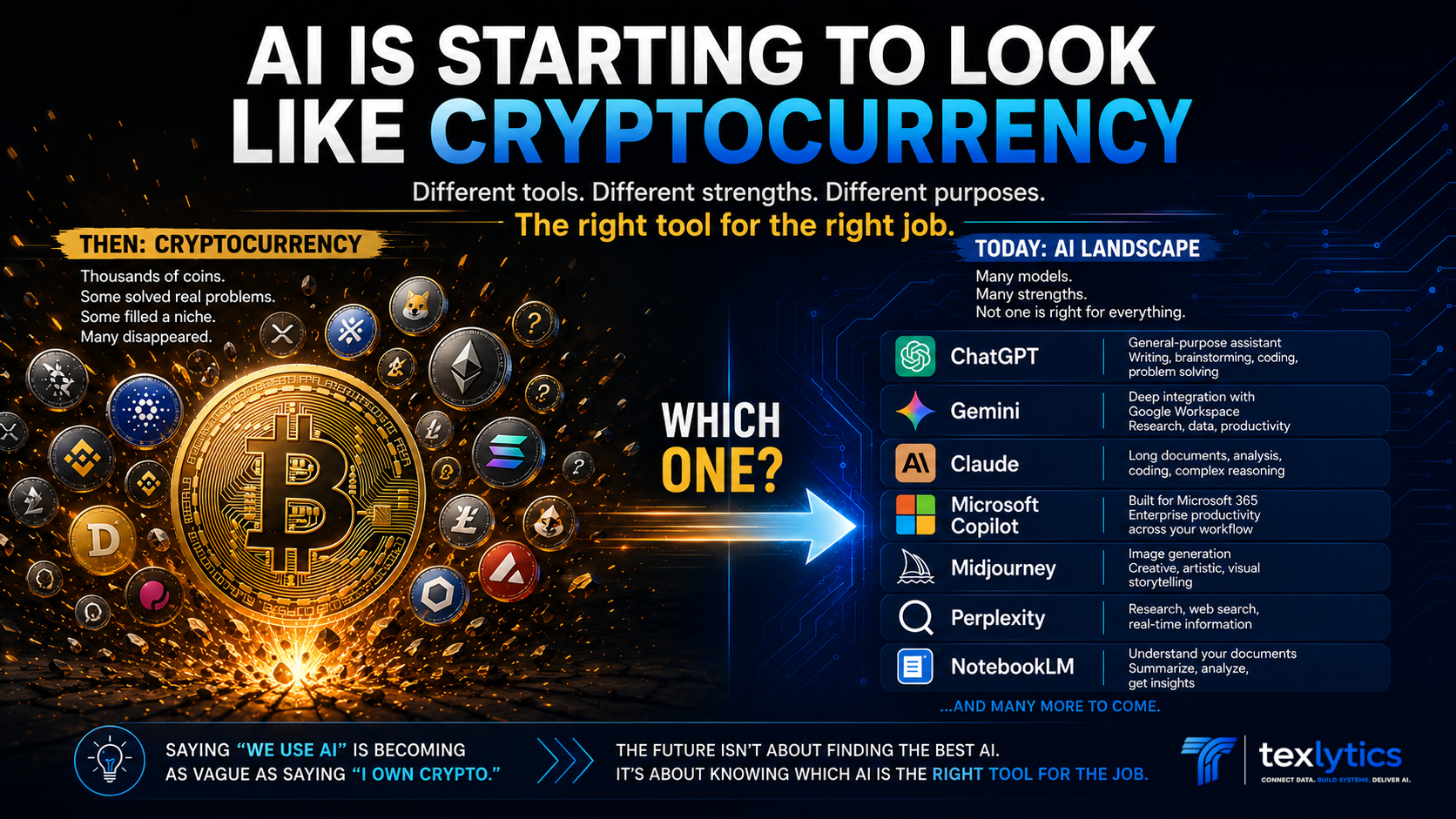
AI Is Starting to Look Like Cryptocurrency

Remember when cryptocurrency meant Bitcoin? Then Ethereum came along. Before long, there were thousands of cryptocurrencies. Some had a clear purpose. Some filled a niche. Some disappeared almost as quickly as they appeared. I think artificial intelligence is following a similar path. Not because AI is another investment craze, but because it’s no longer one thing. A few years ago, “AI” was almost a single product in most people’s minds. Today, there are dozens of major models, each with different strengths. Building a custom AI agent for a…

Read more
19/08/ 2026
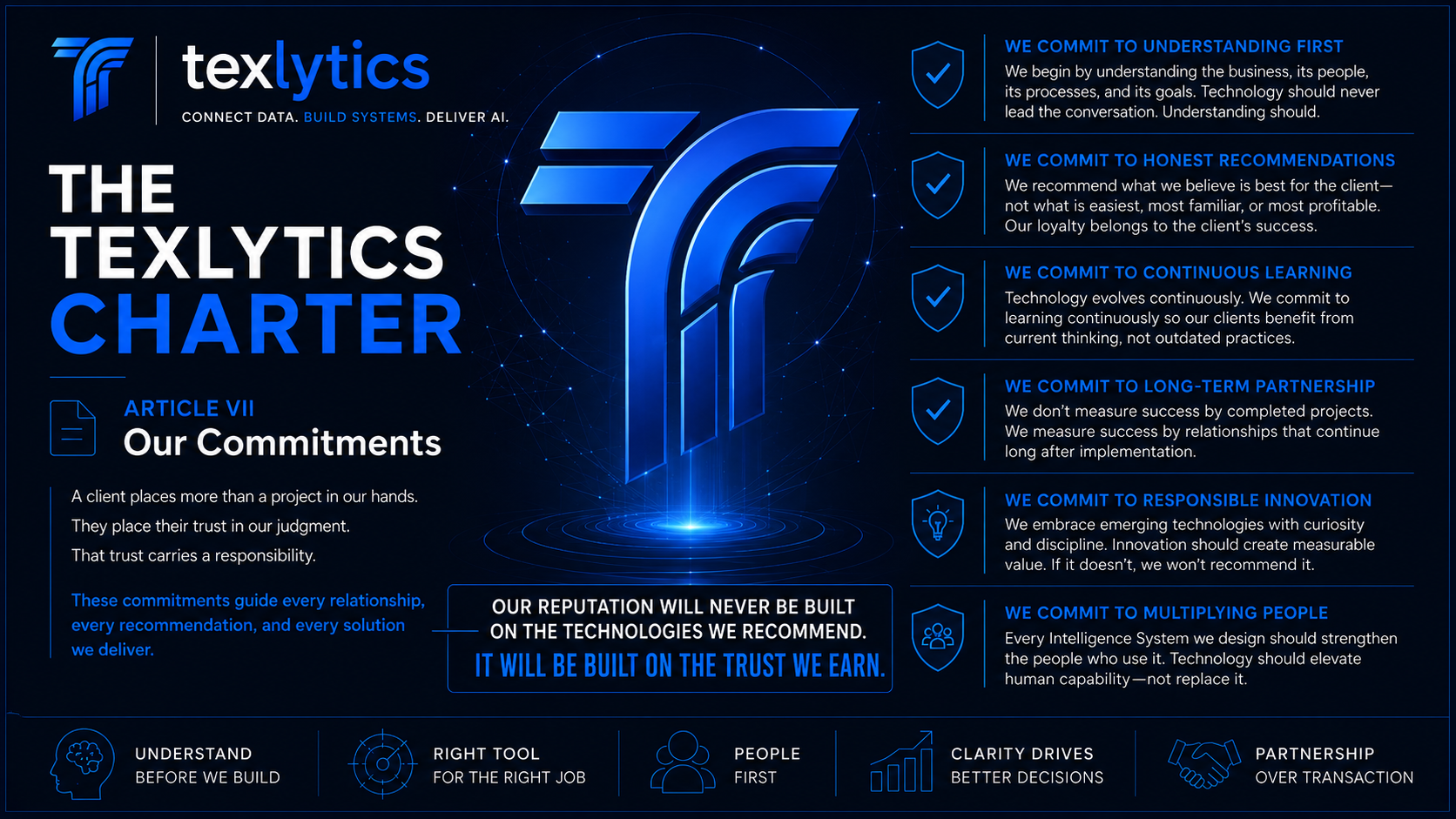
Article VII — Our Commitments

The texlytics Charter A client places more than a project in our hands. They trust us with their business challenges, their resources, and their confidence in our judgment. That trust carries a responsibility, which is why every texlytics engagement is guided by commitments intended to be clear, measurable, and enduring. We Commit to Understanding First Before recommending a solution, we commit to understanding the organization behind the problem. That means learning about the business, its people, its processes, and the goals it is trying to achieve. Technology should…

Read more
12/08/ 2026
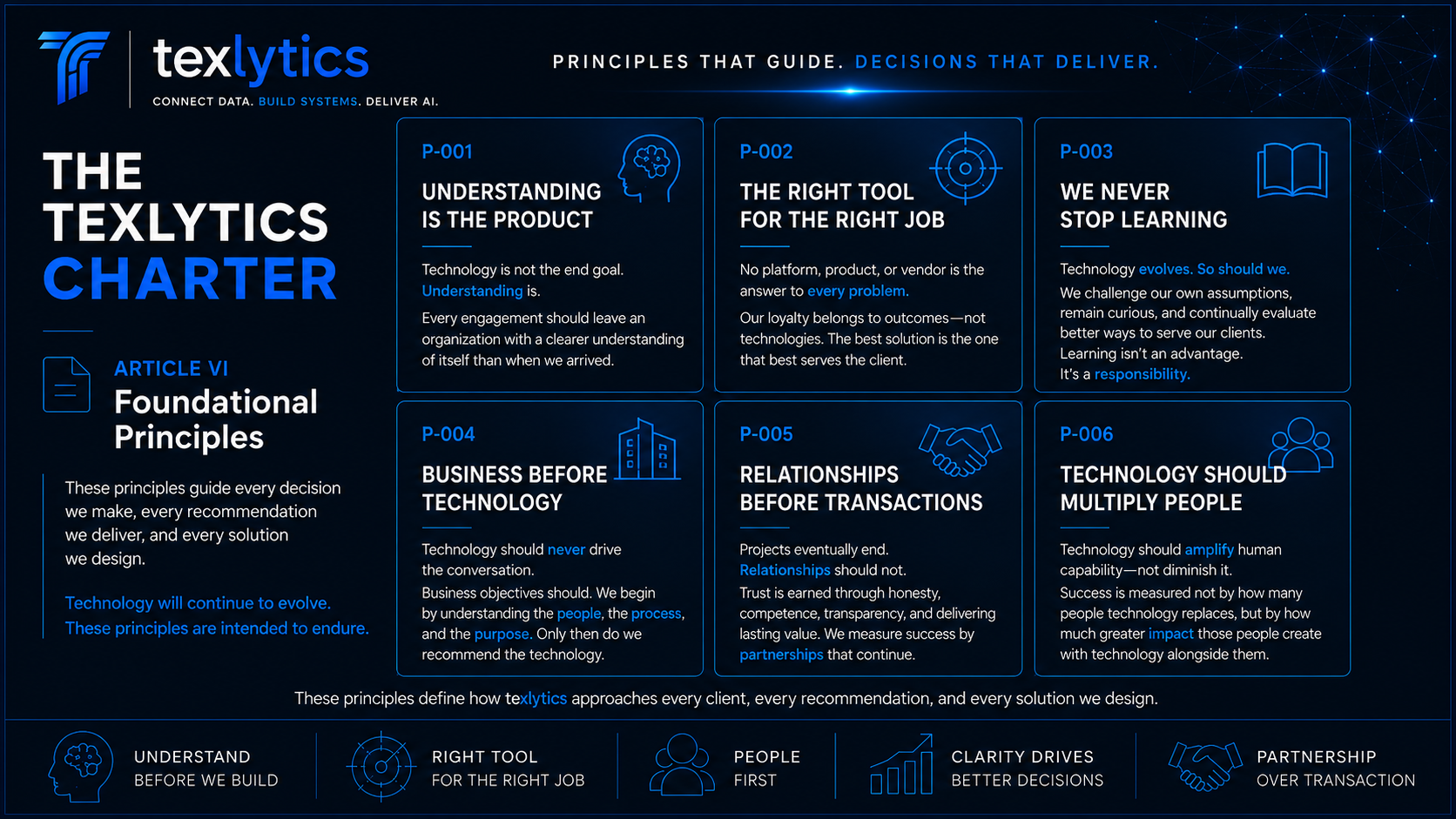
Article VI — Foundational Principles

The texlytics Charter Series The Principles That Guide Our Decisions Every recommendation begins with a decision, and every decision should be grounded in a principle. At texlytics, our principles are not marketing statements or suggestions we follow only when circumstances are convenient. They are the standards we return to when choices are difficult, technologies are competing, or the correct path is not immediately clear. Together, these six principles define how we approach every client, recommendation, and Intelligence System we design. Principle 1: Understanding Is the Product Technology is…

Read more
05/08/ 2026
Article V — Human Intelligence and texlytics Intelligence Systems

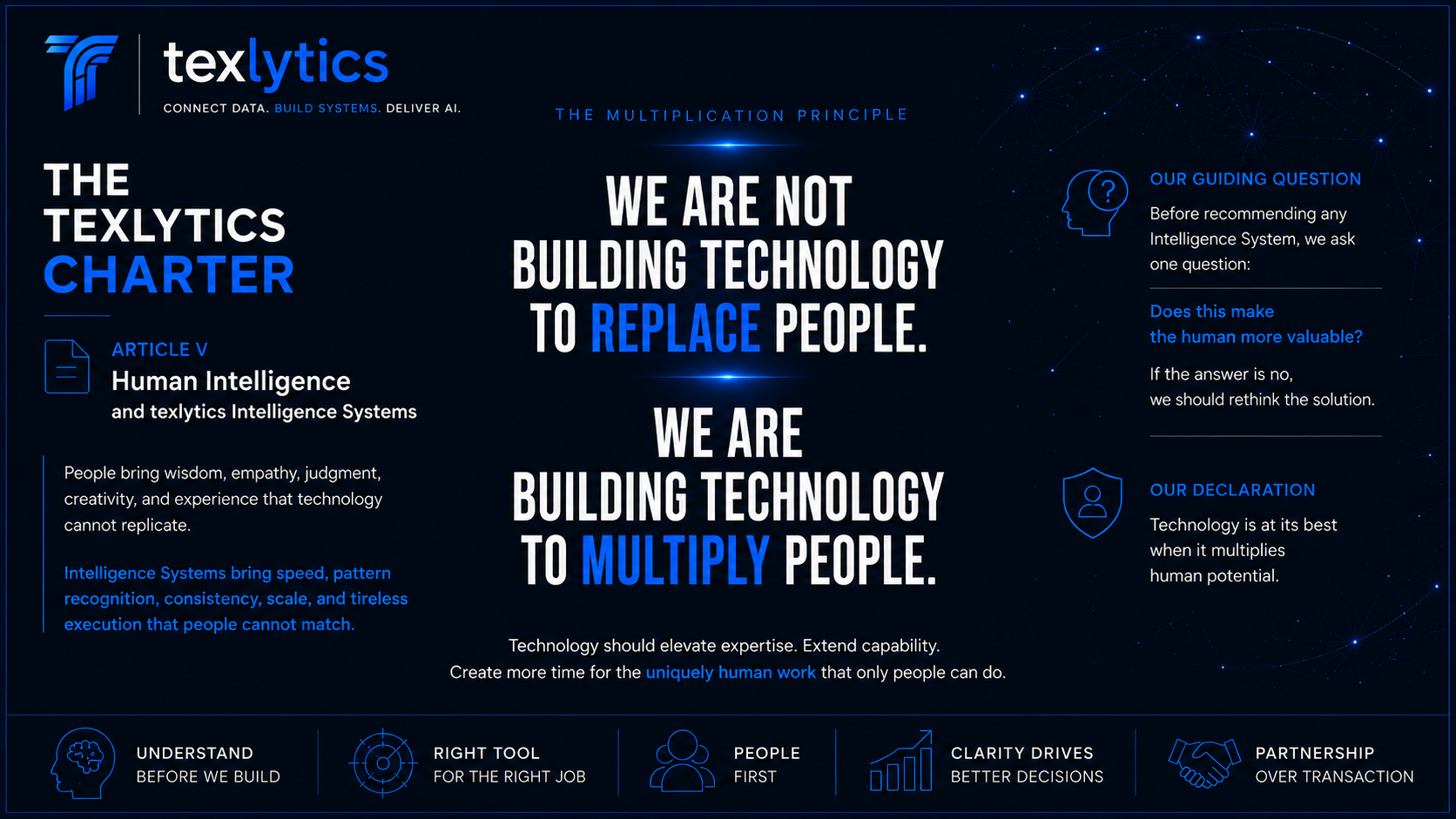
The texlytics Charter Series The Multiplication Principle Artificial intelligence is changing the way organizations work. Too often, however, the conversation begins with the wrong question. “How can AI replace this person?” At texlytics, we believe there’s a better question. “How can AI multiply this person’s impact?” People possess qualities that technology cannot replicate. Intelligence Systems possess strengths that people cannot match. The future isn’t choosing one over the other. The future is designing systems where each contributes what it does best. Our Guiding Question Before recommending any Intelligence…

Read more
31/07/ 2026
Don’t Buy Technology. Solve Problems.

A recent conversation on LinkedIn with Enterprise Systems & Data Architect Iosiv Popescu inspired this article. During a discussion about data migrations, he made an observation that stayed with me long after the conversation ended: “The business meaning never changed; only the source did.” The more I thought about that statement, the more I realized it applies to far more than data architecture. It applies to the way many organizations approach technology itself. For years, I’ve watched companies begin major initiatives by talking almost exclusively about software. The…

Read more
29/07/ 2026
Article IV — Our Beliefs

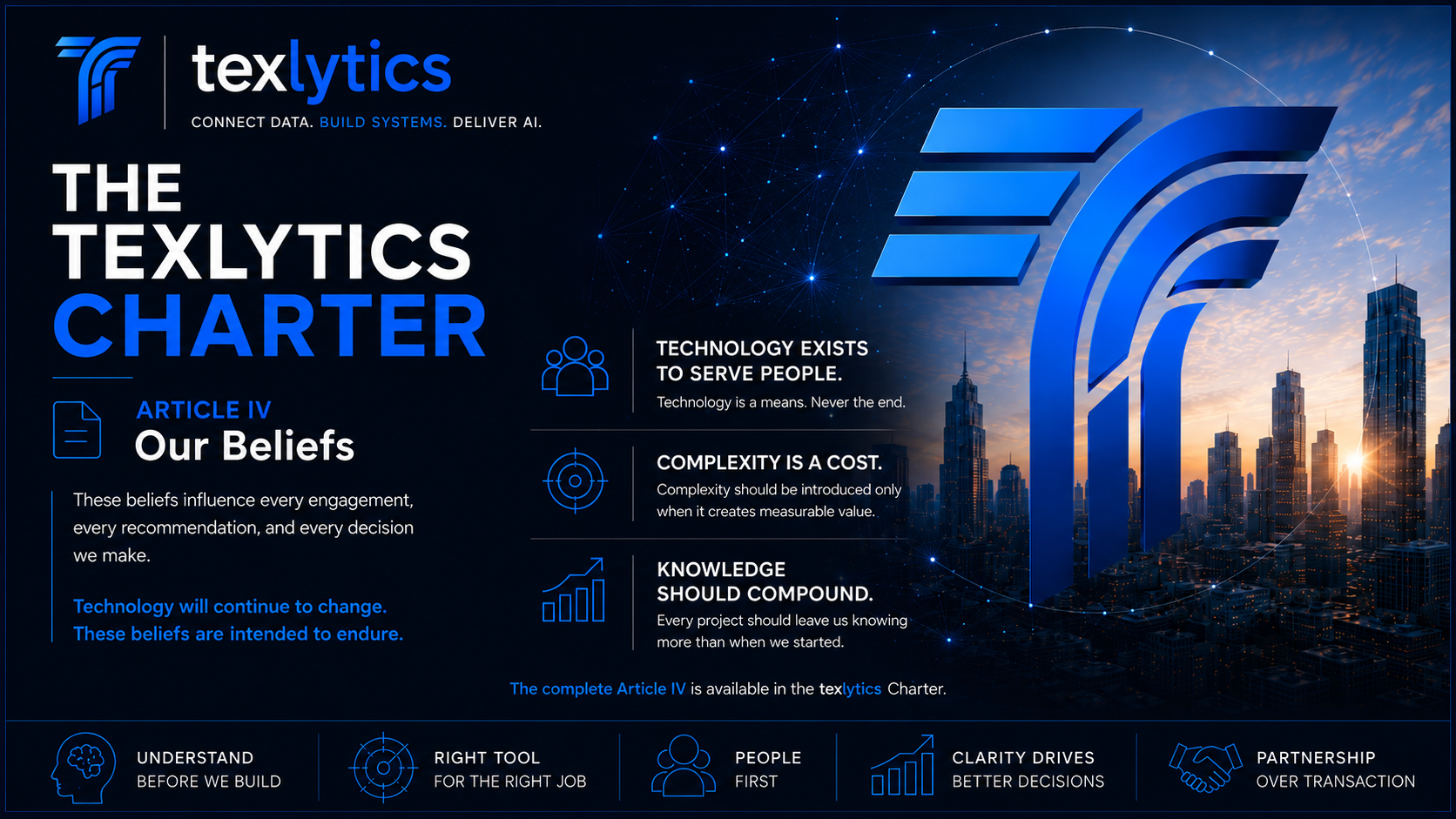
The texlytics Charter Series Every organization operates according to a set of beliefs. Some are written down. Most are not. At texlytics, we believe those beliefs should be intentional, because they influence every recommendation we make and every solution we design. Our beliefs are simple. Organizations usually possess more knowledge than they realize. Understanding creates better decisions. Complexity is a cost. Technology exists to serve people. Curiosity is a competitive advantage. Learning is a professional responsibility. Trust is earned. Knowledge should compound. These beliefs influence every engagement, every…

Read more
22/07/ 2026
Article III – Vision

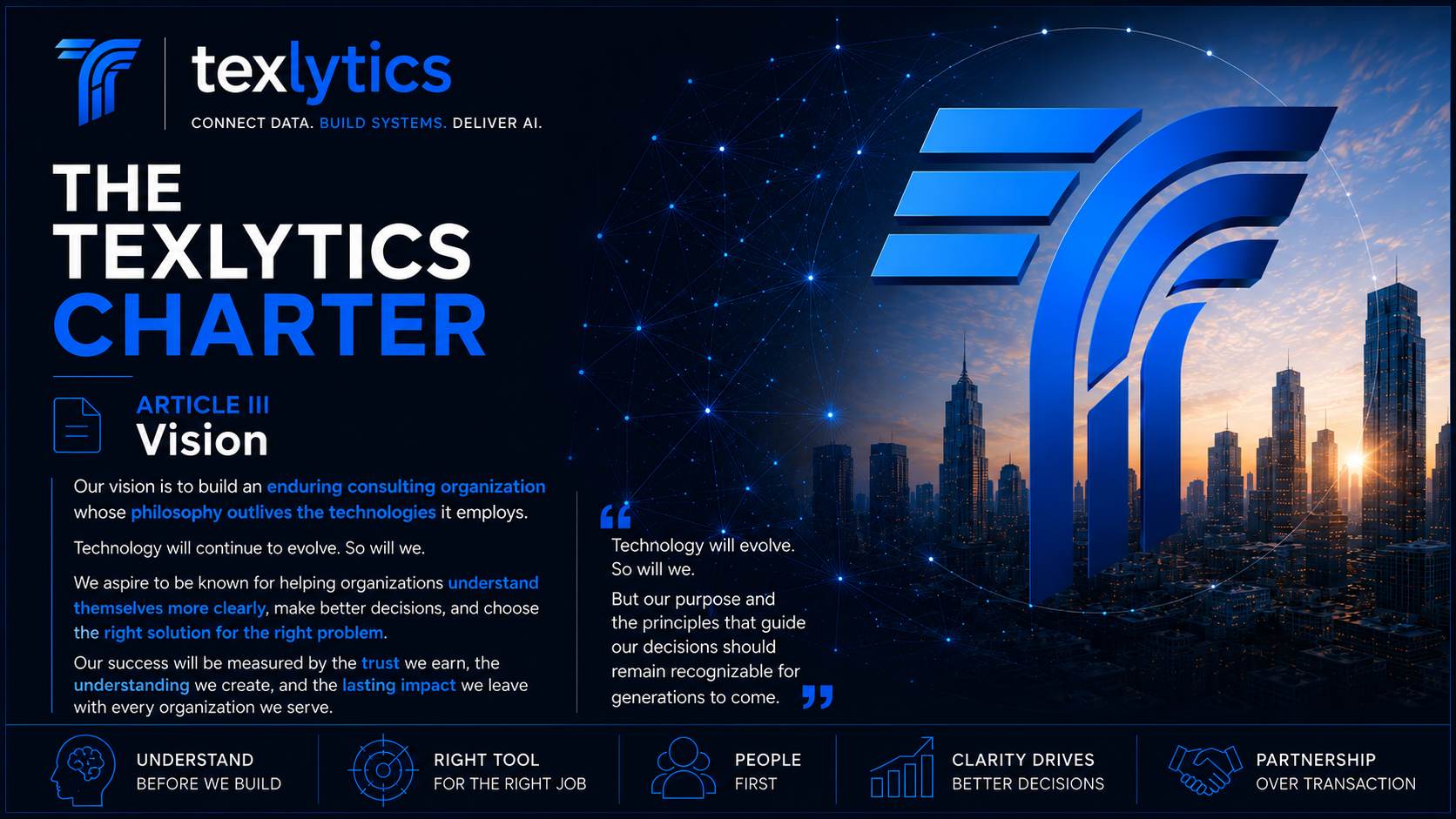
The texlytics Charter Series Every company has goals. Those things matter. But they’re not a vision. A vision should answer a much bigger question: What are we trying to build that will outlast us? For texlytics, our vision has never been to become known for a particular technology. Technology changes. Platforms evolve. Today’s innovations become tomorrow’s legacy systems. If we define ourselves by the tools we use, we’ll spend our future chasing the next trend. Instead, we’re building something that we hope will endure. To build an enduring…

Read more
17/07/ 2026
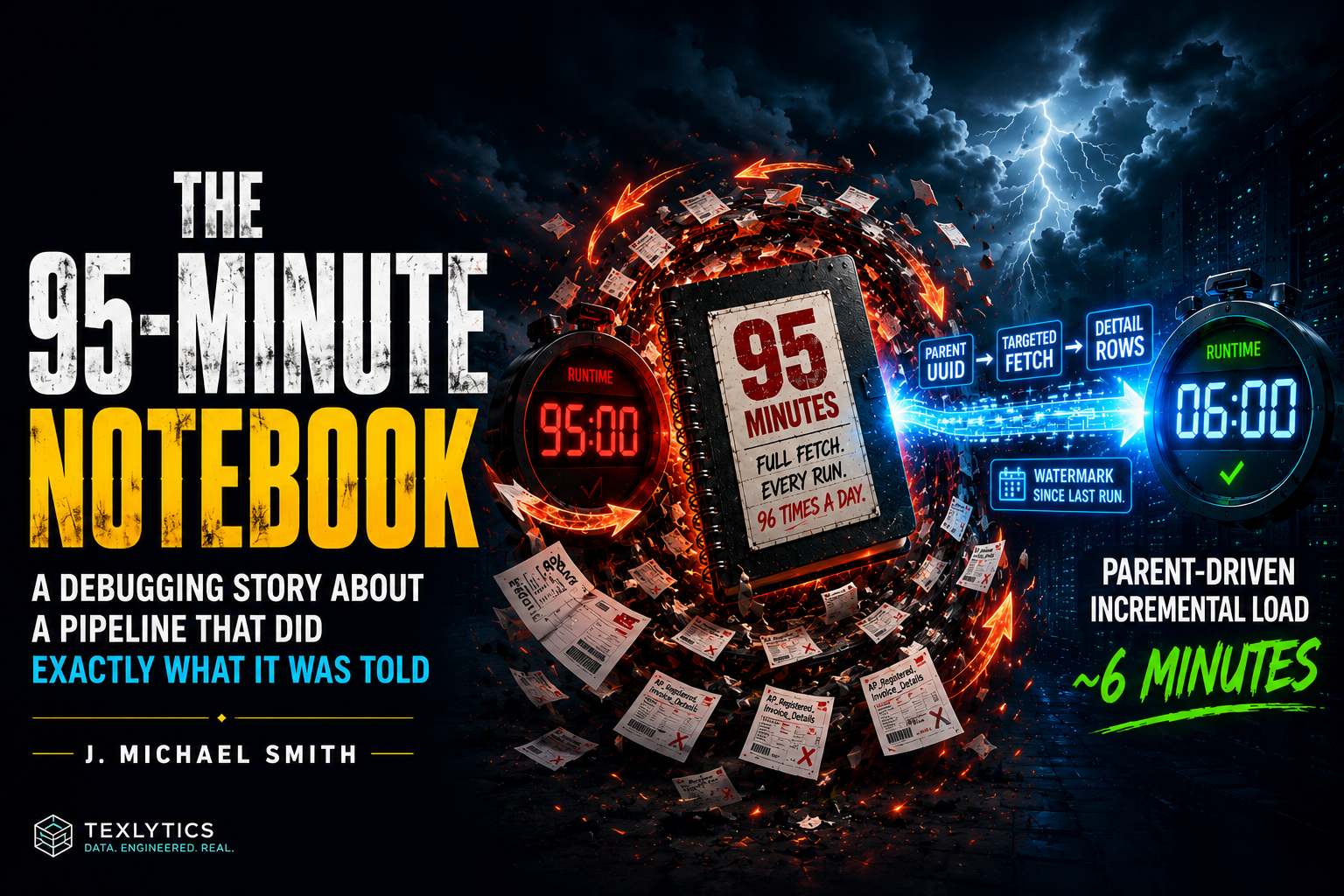
The 95-Minute Notebook

This article was originally published on LinkedIn and is archived here on texlytics.com. The symptom Our Bronze ingestion notebook on Microsoft Fabric had a runtime problem. The notebook pulls incremental changes from CMiC’s REST APIs into a lakehouse on a 15-minute cadence — dozens of endpoints, all driven from a single control table. The kind of thing that should finish in a few minutes. It was taking 95. Here’s what made it interesting: the Python wasn’t slow. The API calls came back quickly. The filtering and dedupe logic…

Read more
15/07/ 2026
Article II – Mission

The texlytics Charter Series Technology isn’t our mission. Understanding is. At texlytics, we don’t start with software. We start by understanding the business. Every organization has its own goals, processes, challenges, and people. Technology should reflect those differences, not force businesses into someone else’s way of working. That’s why we ask questions before we recommend solutions. The technology is never the destination. It’s simply the vehicle. That philosophy is what led to the creation of Origo. Not because the world needed another platform, but because we saw too…

Read more
09/07/ 2026
Article I – Purpose

The texlytics Charter Series The purpose of texlytics is to help organizations better understand themselves. We transform complexity into clarity by connecting information, people, systems, and intelligence so better decisions become possible. Those two sentences define everything we build. Businesses rarely struggle because they lack information. They struggle because information exists in too many places, disconnected from the context needed to make confident decisions. Information is often scattered across: Our job isn’t simply to connect systems. Our job is to connect understanding. When understanding improves: This philosophy shapes…

Read more