
texlytics

Loading

Category Leadership & Strategy

02/10/ 2026
Mirroring or Eventhouse?

A team I was talking with recently had a familiar mid-market reporting problem. Their nightly refresh took eight hours. The data lived in on-premises SQL Server, stitched together with linked servers, and almost none of the tables had indexes. Reports were stale by the time anyone opened them, and if a job failed overnight, they were stale for a full day. They wanted to move to Fabric and build semantic models on top. The first question on the table was whether to connect the linked server to Eventhouse…

Read more
25/09/ 2026
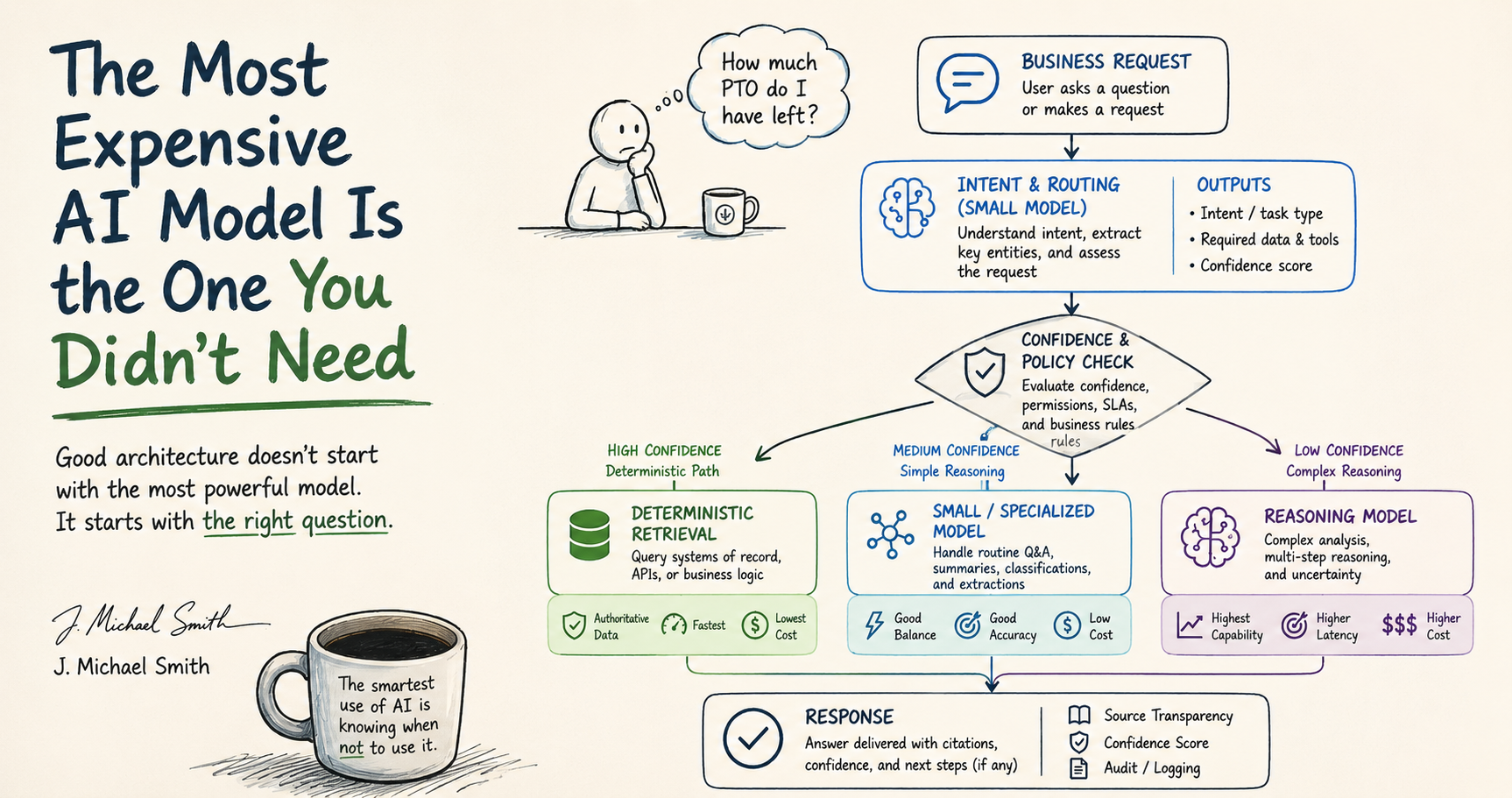
The Most Expensive AI Model Is the One You Didn’t Need

There is a growing conversation about the cost of artificial intelligence. Tokens cost money. GPUs cost money. AI subscriptions cost money. Enterprise licensing costs money. As organizations put AI into more business processes, those costs scale surprisingly quickly. All of that is true, and I think most of the conversation is happening at the wrong layer. Before asking what an AI model costs, we should ask two simpler questions: Did this task need an AI model at all, and if it did, did it need that model? That…

Read more
04/09/ 2026
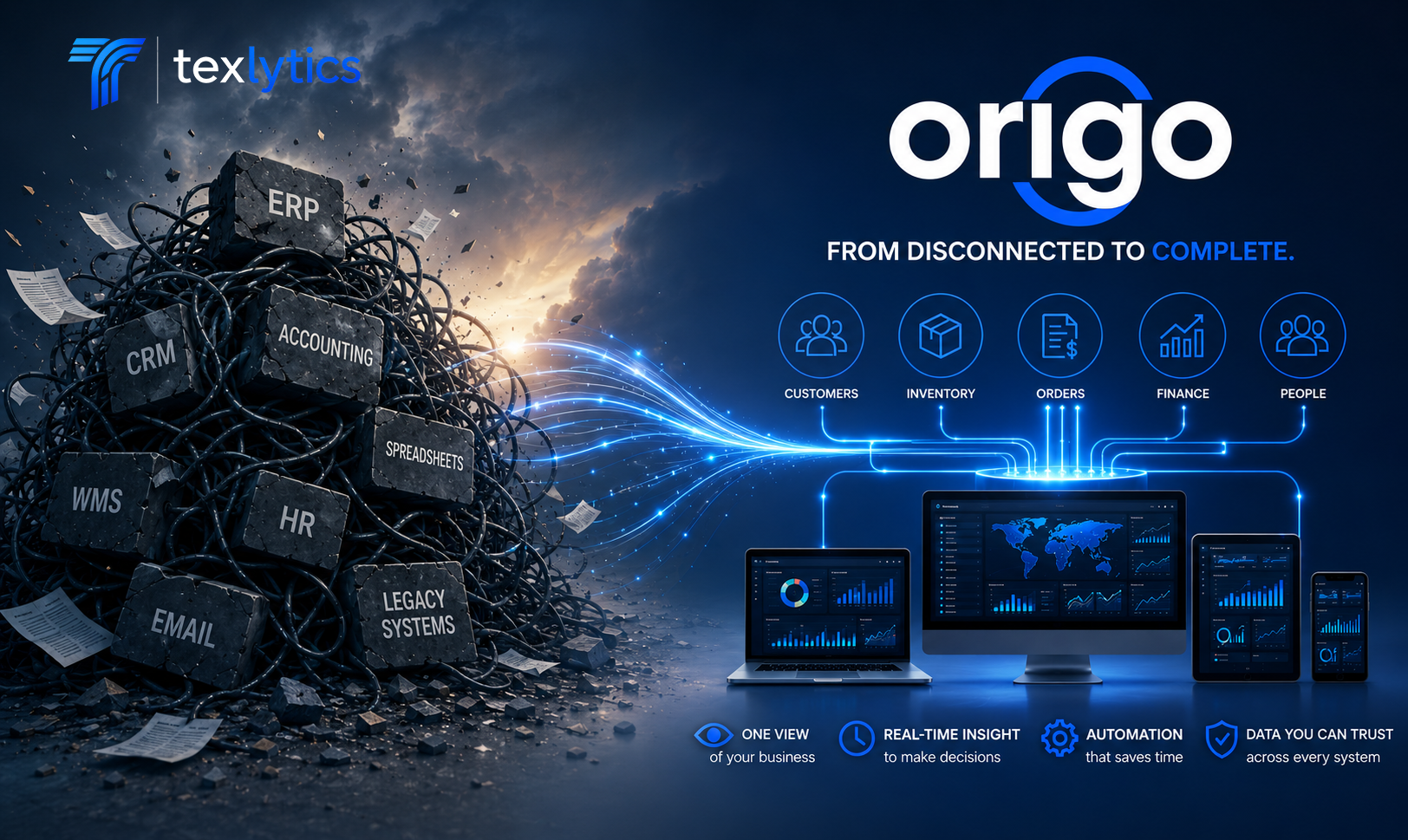
Your ERP Is Not Your Source of Truth. And That’s Okay.

One of the most common questions I hear when talking with business leaders is, “What’s the best ERP system?” It is a reasonable question, but after more than twenty-five years of designing integrations, building data platforms, and helping organizations solve technology problems, I have come to believe it is the wrong place to start. The better question is not which system can do everything. It is how we make all the systems already running the business work together. The Reality of Modern Business I have yet to work…

Read more
02/09/ 2026
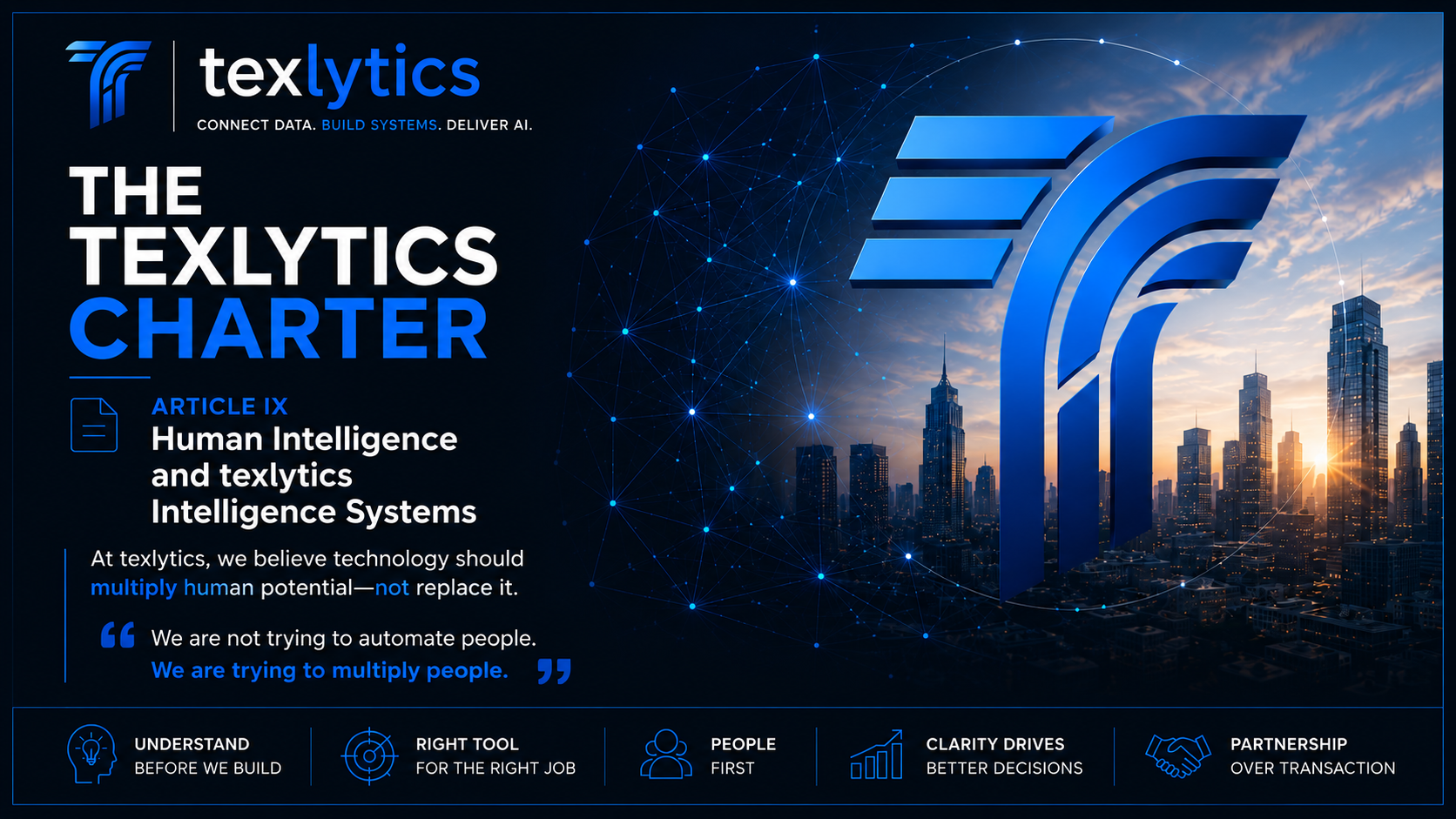
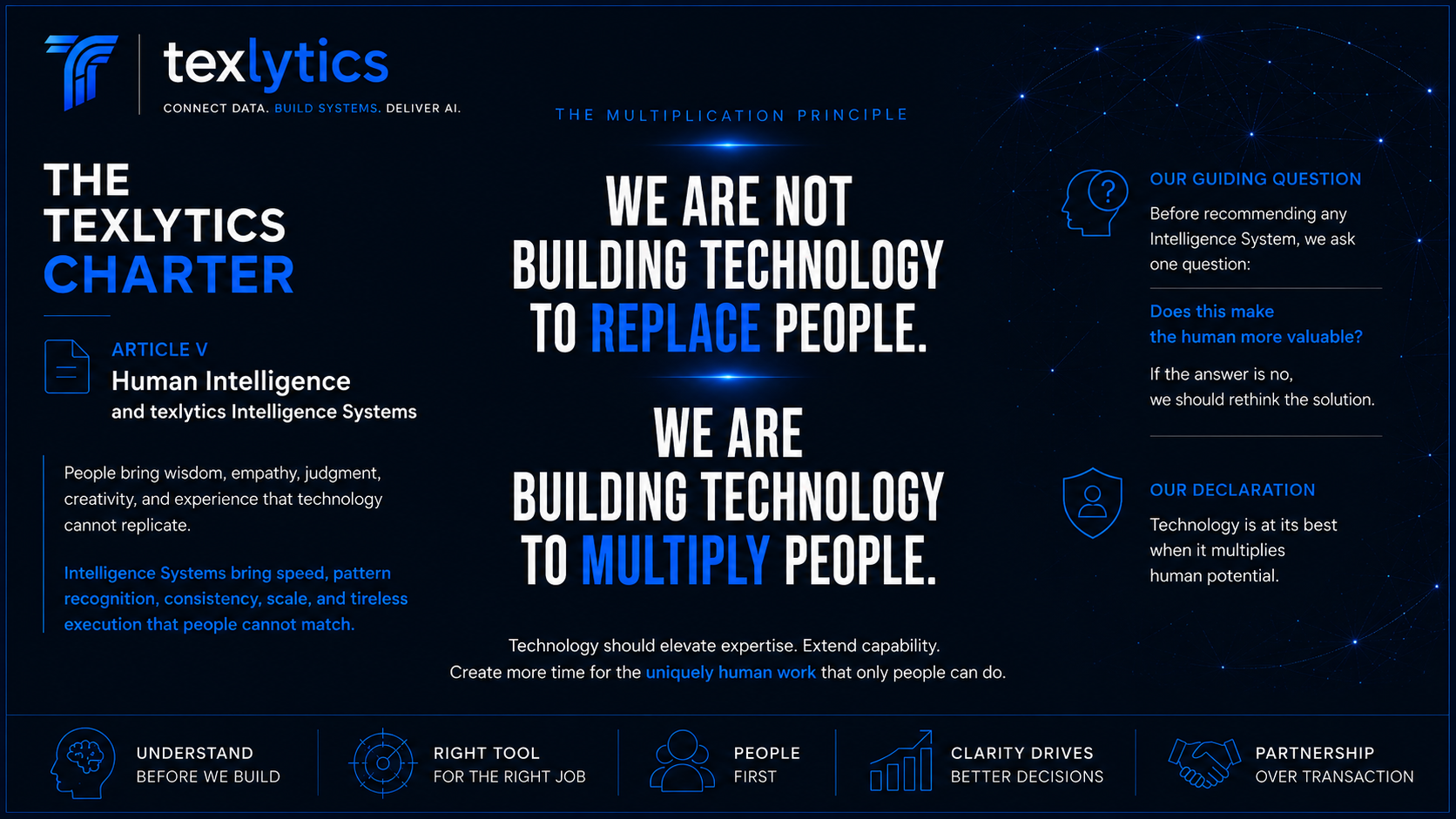
Article IX – Human Intelligence and texlytics Intelligence Systems

Today we’re sharing another excerpt from the developing texlytics Charter, the document that defines the enduring beliefs and principles upon which our company is being built. As artificial intelligence continues to reshape the workplace, much of the conversation has focused on which jobs or responsibilities it might replace. At texlytics, we believe there is a more useful question organizations should be asking: How can AI multiply the impact of the people already doing the work? People bring wisdom, empathy, judgment, creativity, and experience. Technology contributes speed, consistency, scale,…

Read more
28/08/ 2026
Why We’re Betting on Open Source

Open Source Isn’t the Strategy. Choice Is. Technology has a tendency to turn into camps. Microsoft or open source. Cloud or self-hosted. SaaS or custom development. Low-code or traditional code. Managed services or infrastructure you control. We spend a surprising amount of time debating which approach is better when, in many cases, the more important question is whether we are solving the right problem in the first place. At texlytics, we believe technology decisions should begin with the needs of the business. Once we understand the problem, the…

Read more
26/08/ 2026
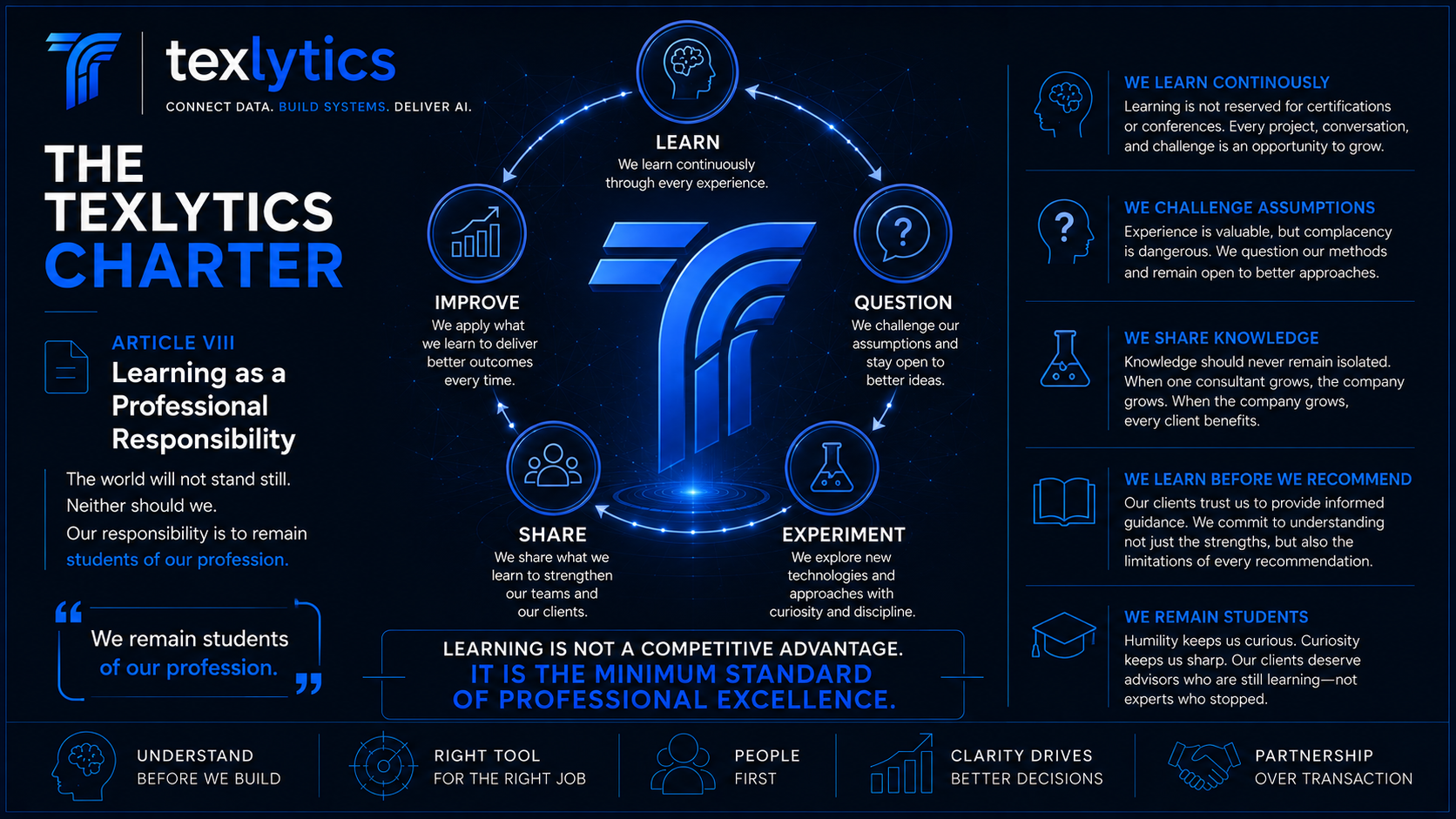
Article VIII — Learning as a Professional Responsibility

The texlytics Charter Series We Learn Continuously Learning is not something reserved for certifications or conferences. It happens through projects. Every experience is an opportunity to improve. We Challenge Our Own Assumptions Experience is valuable. But experience should never become complacency. We regularly question our own methods, evaluate emerging technologies, and remain open to better approaches. The best idea wins—regardless of where it comes from. We Share What We Learn Knowledge should never remain isolated. Every lesson learned should strengthen the entire organization. Learning compounds when it is…

Read more
19/08/ 2026
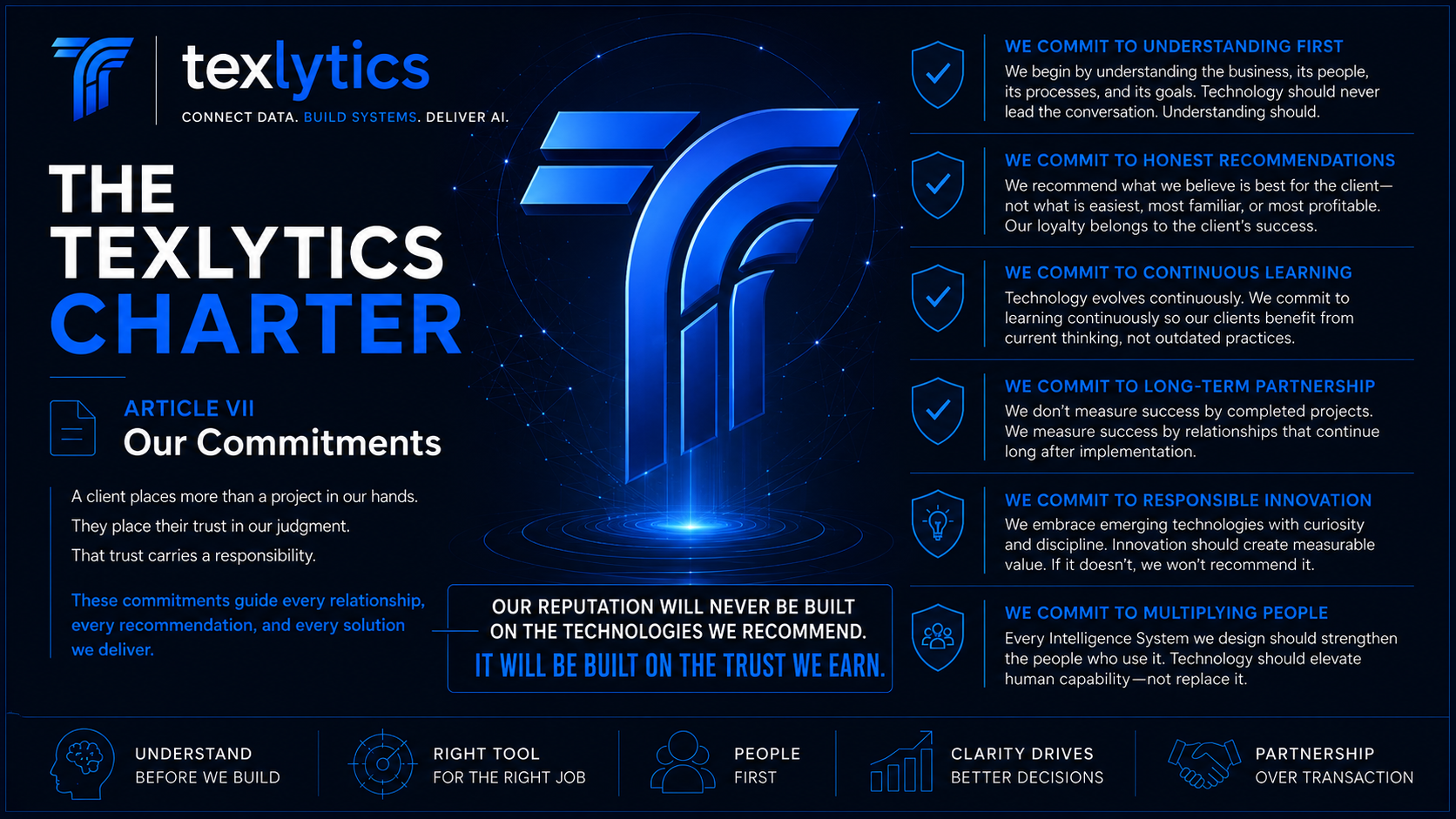
Article VII — Our Commitments

The texlytics Charter A client places more than a project in our hands. They trust us with their business challenges, their resources, and their confidence in our judgment. That trust carries a responsibility, which is why every texlytics engagement is guided by commitments intended to be clear, measurable, and enduring. We Commit to Understanding First Before recommending a solution, we commit to understanding the organization behind the problem. That means learning about the business, its people, its processes, and the goals it is trying to achieve. Technology should…

Read more
12/08/ 2026
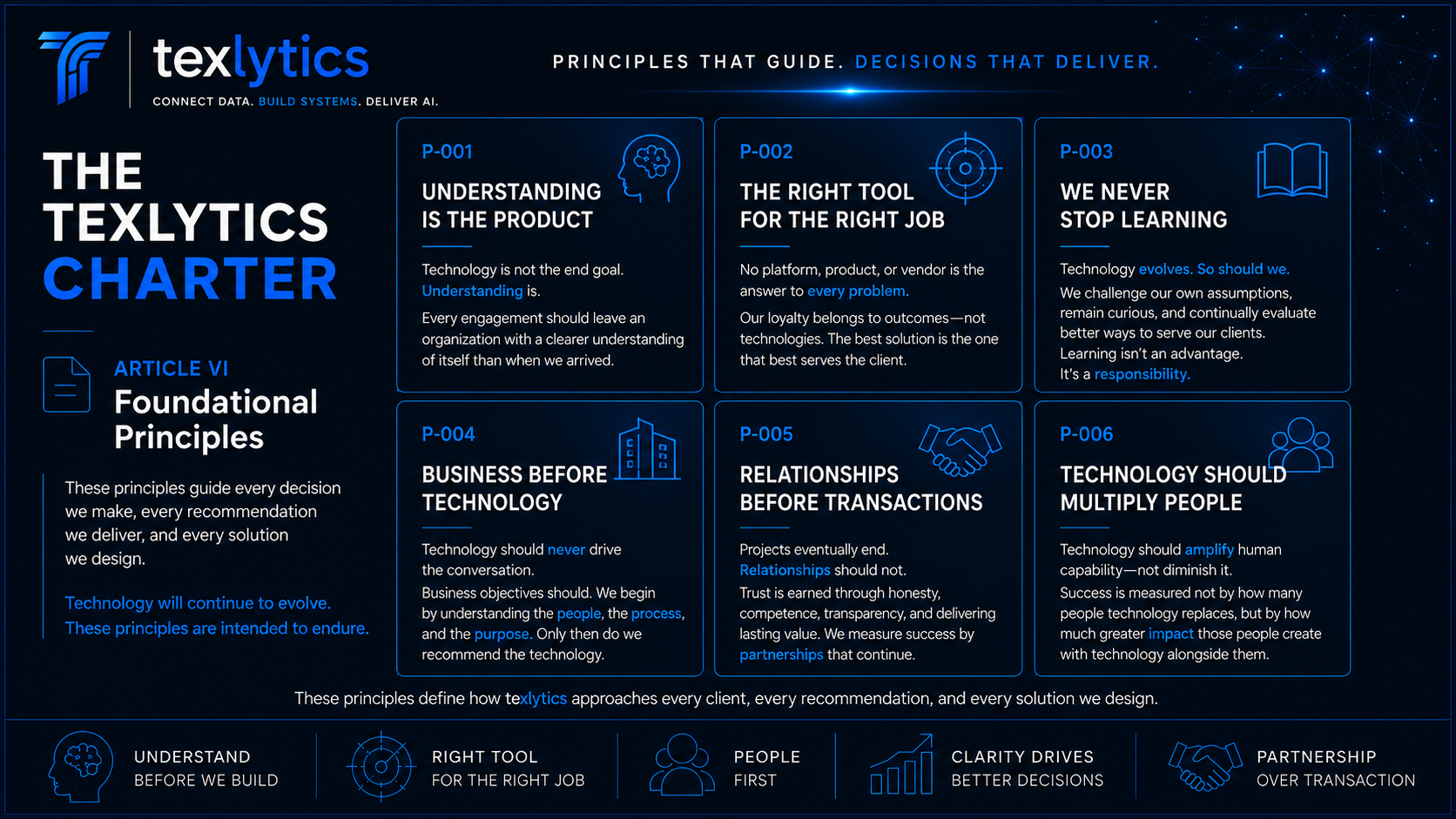
Article VI — Foundational Principles

The texlytics Charter Series The Principles That Guide Our Decisions Every recommendation begins with a decision, and every decision should be grounded in a principle. At texlytics, our principles are not marketing statements or suggestions we follow only when circumstances are convenient. They are the standards we return to when choices are difficult, technologies are competing, or the correct path is not immediately clear. Together, these six principles define how we approach every client, recommendation, and Intelligence System we design. Principle 1: Understanding Is the Product Technology is…

Read more
05/08/ 2026
Article V — Human Intelligence and texlytics Intelligence Systems

The texlytics Charter Series The Multiplication Principle Artificial intelligence is changing the way organizations work. Too often, however, the conversation begins with the wrong question. “How can AI replace this person?” At texlytics, we believe there’s a better question. “How can AI multiply this person’s impact?” People possess qualities that technology cannot replicate. Intelligence Systems possess strengths that people cannot match. The future isn’t choosing one over the other. The future is designing systems where each contributes what it does best. Our Guiding Question Before recommending any Intelligence…

Read more
29/07/ 2026
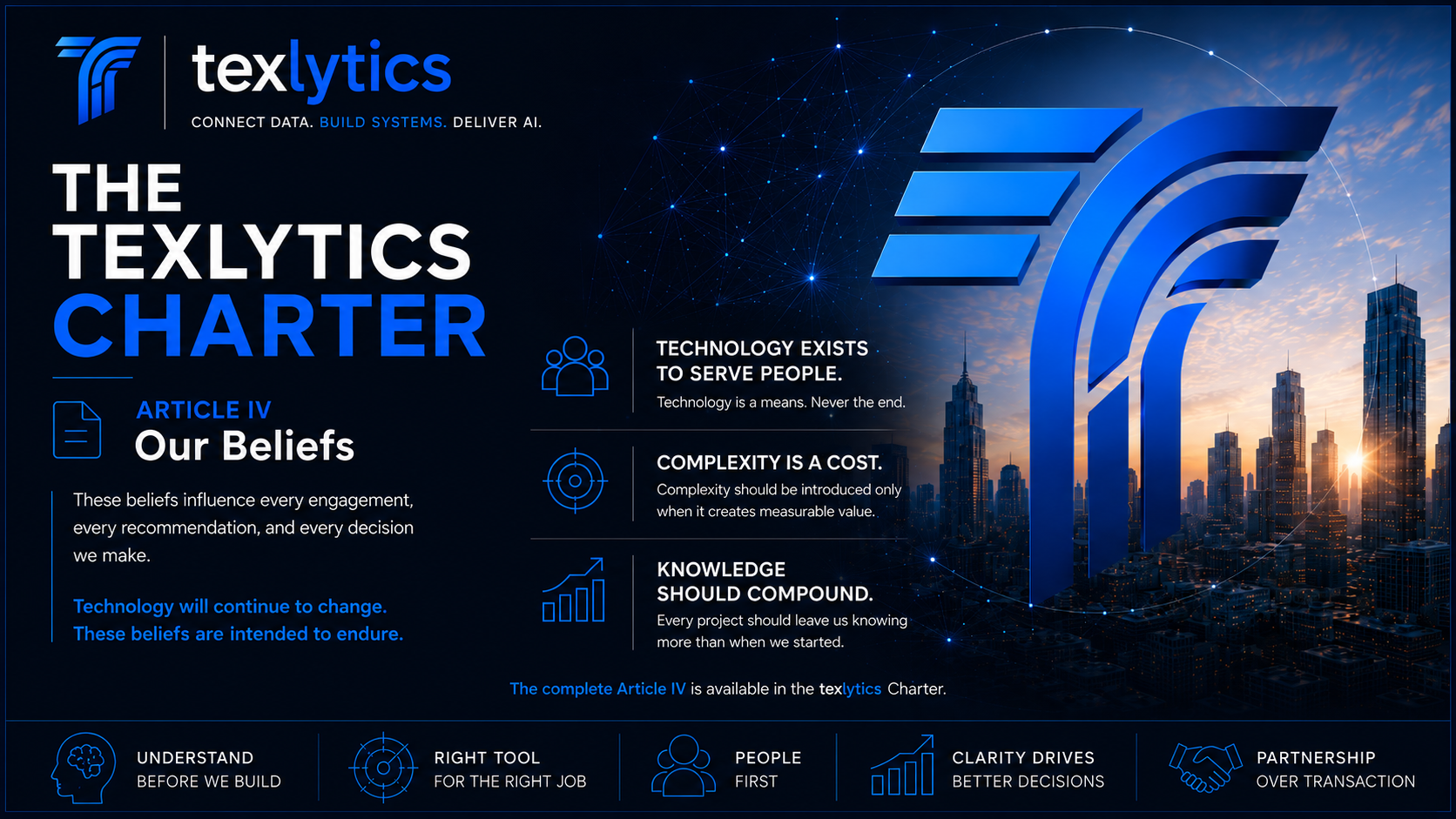
Article IV — Our Beliefs

The texlytics Charter Series Every organization operates according to a set of beliefs. Some are written down. Most are not. At texlytics, we believe those beliefs should be intentional, because they influence every recommendation we make and every solution we design. Our beliefs are simple. Organizations usually possess more knowledge than they realize. Understanding creates better decisions. Complexity is a cost. Technology exists to serve people. Curiosity is a competitive advantage. Learning is a professional responsibility. Trust is earned. Knowledge should compound. These beliefs influence every engagement, every…

Read more